Pulling Back the Curtain on EPA’s PFAS Health Advisories  

By Susan Goldhaber MPH — Aug 17, 2022
Similar to the Wizard of Oz, surprising facts are revealed when the curtain is pulled back on EPA’s PFAS Health Advisories. Why did EPA set protective “safe levels” against adverse outcomes not seen in the U.S. population? In this article, I will examine why EPA set the health advisories using methodology as they did, which I believe, allows scare tactics against PFAS to continue and flourish.
Similar to the Wizard of Oz, surprising facts are revealed when the curtain is pulled back on EPA’s PFAS Health Advisories. Why did EPA set protective “safe levels” against adverse outcomes not seen in the U.S. population? In this article, I will examine why EPA set the health advisories using methodology as they did, which I believe, allows scare tactics against PFAS to continue and flourish.


Podcast: Salt Ain't So Bad After All? Diagnosing SIDS Before It's Too Late

By Cameron English — Aug 16, 2022
We've been told for decades that less is more when it comes to salt in the diet. Recent research has thrown that conclusion into doubt. Can we identify children who may be at risk for SIDS before it suddenly and tragically strikes?

We've been told for decades that less is more when it comes to salt in the diet. Recent research has thrown that conclusion into doubt. Can we identify children who may be at risk for SIDS before it suddenly and tragically strikes?

Activist Groups Claim Pesticides on Food Are Harmful. FDA Says Otherwise.

By Cameron English — Aug 16, 2022
The FDA has released the latest results from its Pesticide Residue Monitoring Program. Activist groups are scrambling to dismiss the report.

The FDA has released the latest results from its Pesticide Residue Monitoring Program. Activist groups are scrambling to dismiss the report.

What Makes Omicron Special? Centaurus Gives Us a Clue

By Josh Bloom — Aug 16, 2022
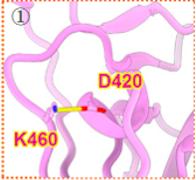
If you're sick and tired of hearing about yet another Omicron subvariant taking over the world you're not alone. But there is one subvariant called Centaurus, aka B.27.5, that provides a fascinating example of how a seemingly-minuscule mutation can have a profound effect on the virus. And, at no extra cost, a Dreaded Chemistry Lesson From Hell! Plus a gratuitous shot at Dr. Oz.

If you're sick and tired of hearing about yet another Omicron subvariant taking over the world you're not alone. But there is one subvariant called Centaurus, aka B.27.5, that provides a fascinating example of how a seemingly-minuscule mutation can have a profound effect on the virus. And, at no extra cost, a Dreaded Chemistry Lesson From Hell! Plus a gratuitous shot at Dr. Oz.

Organic Farming is Not Monolithic

By Chuck Dinerstein, MD, MBA — Aug 16, 2022
According to our “friends” at the EWG, “American consumers spent a total of $20.4 billion on organic fruits and vegetables, fresh and frozen combined, in 2020, making organic produce now 15 percent of all fruits and vegetables sold in the U.S.” [1] So perhaps we might begin to call it Big Organic, it certainly is showing the same type of market forces as conventional Big Ag. Don’t let the marketing fool you; organic is no longer just those family farms and farmers, as a new study in Nature reports.

According to our “friends” at the EWG, “American consumers spent a total of $20.4 billion on organic fruits and vegetables, fresh and frozen combined, in 2020, making organic produce now 15 percent of all fruits and vegetables sold in the U.S.” [1] So perhaps we might begin to call it Big Organic, it certainly is showing the same type of market forces as conventional Big Ag. Don’t let the marketing fool you; organic is no longer just those family farms and farmers, as a new study in Nature reports.

Asbestos Causes Cancer? Only if You Can Prove It – and That’s Getting Harder

Personal injury lawyers are either revered or reviled. Sometime purveyors of junk science, they often prey on a vulnerable and scientifically averse judiciary. But things are a’changin- at least for asbestos. And that signals bad news for the talc plaintiffs.

Personal injury lawyers are either revered or reviled. Sometime purveyors of junk science, they often prey on a vulnerable and scientifically averse judiciary. But things are a’changin- at least for asbestos. And that signals bad news for the talc plaintiffs.

ACSH Explains: Public Health Emergencies

By Chuck Dinerstein, MD, MBA — Aug 15, 2022
What do Monkeypox, the opioid crisis, New Mexico fires, Kentucky flooding, and COVID-19 have in common? All have been declared public health emergencies. [1] So what exactly does a declaration of a public health emergency mean?

What do Monkeypox, the opioid crisis, New Mexico fires, Kentucky flooding, and COVID-19 have in common? All have been declared public health emergencies. [1] So what exactly does a declaration of a public health emergency mean?

COVID-19 Deaths Follow Infections, But When?

By Fred Lipfert, PhD — Aug 15, 2022
Daily infection rates are a crucial metric for assessing the spread and intensity of COVID-19, but daily death counts have been of more concern to public health. The lag between infection and death is well known but seldom recognized by the media or various COVID tracking websites. When we hear a pronouncement of increased caseloads but reassurance since death rates remain stable, we’re tempted to respond, “Just wait!” 

Daily infection rates are a crucial metric for assessing the spread and intensity of COVID-19, but daily death counts have been of more concern to public health. The lag between infection and death is well known but seldom recognized by the media or various COVID tracking websites. When we hear a pronouncement of increased caseloads but reassurance since death rates remain stable, we’re tempted to respond, “Just wait!” 

Small Modular Nuclear Reactors

By Doctor Y — Aug 15, 2022
The last several years have even given skeptics reasons to consider reducing our fossil fuel use and replacing it with something else. The problem is that so many of the “something else” alternatives can’t be counted on to keep our cities powered up (try using solar energy at night), and we currently don’t have the technology to store excess energy for a (literal) rainy or windless day. Sure, lithium-ion batteries are growing in capacity, but they’re not yet city-sized and tend to catch fire from time to time. We need a stable, safe, reliable source of power that doesn’t rely on burning fuel – something like nuclear energy.

The last several years have even given skeptics reasons to consider reducing our fossil fuel use and replacing it with something else. The problem is that so many of the “something else” alternatives can’t be counted on to keep our cities powered up (try using solar energy at night), and we currently don’t have the technology to store excess energy for a (literal) rainy or windless day. Sure, lithium-ion batteries are growing in capacity, but they’re not yet city-sized and tend to catch fire from time to time. We need a stable, safe, reliable source of power that doesn’t rely on burning fuel – something like nuclear energy.

The Rise of the Pathogens

By Chuck Dinerstein, MD, MBA — Aug 12, 2022
This summer, there have been more shark sightings, attacks, and public awareness than the summer of “Jaws” in 1975. Systemic infections by fungus are relatively rare in humans (athlete’s foot is a fungal skin infection); one theory holds that our core temperature of 98.6 is a bit too low for most fungal infections to thrive. [1] What do these two seemingly disparate facts have in common – the role of rising temperatures and humans’ biological niche? According to a new study, our rising temperatures may bring us more intense weather and more intense pathogens.

This summer, there have been more shark sightings, attacks, and public awareness than the summer of “Jaws” in 1975. Systemic infections by fungus are relatively rare in humans (athlete’s foot is a fungal skin infection); one theory holds that our core temperature of 98.6 is a bit too low for most fungal infections to thrive. [1] What do these two seemingly disparate facts have in common – the role of rising temperatures and humans’ biological niche? According to a new study, our rising temperatures may bring us more intense weather and more intense pathogens.