Every Picture Tells a Story: Scientific American’s 175th Anniversary

By Chuck Dinerstein, MD, MBA — Aug 26, 2020
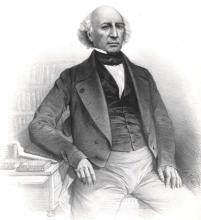
September marks the 175th anniversary of Scientific American, one of the magazines from a memorable era in journalism that included Life as well as Time – periodicals longer than 20 pages. In honor of SA's anniversary, the editors devoted an article to the words used in articles since the founding of the magazine back in 1845.

September marks the 175th anniversary of Scientific American, one of the magazines from a memorable era in journalism that included Life as well as Time – periodicals longer than 20 pages. In honor of SA's anniversary, the editors devoted an article to the words used in articles since the founding of the magazine back in 1845.


Coronavirus: Living with COVID in Europe vs. America

By Alex Berezow, PhD — Aug 26, 2020
There are some striking differences between how Europeans and Americans are navigating the pandemic. The latter have a lot to learn from the former.

There are some striking differences between how Europeans and Americans are navigating the pandemic. The latter have a lot to learn from the former.

Thinking Aloud: Blaming and Shaming in the Time of COVID-19

By Chuck Dinerstein, MD, MBA — Aug 25, 2020
As I watch the current debacle of our children preparing to return to school, I more and more feel it is time to take a moment to talk about the errors we have made. My original thoughts turned to responsibility and accountability, words that have occupied my professional life as a surgeon, words molding my thinking just as they molded my character.

As I watch the current debacle of our children preparing to return to school, I more and more feel it is time to take a moment to talk about the errors we have made. My original thoughts turned to responsibility and accountability, words that have occupied my professional life as a surgeon, words molding my thinking just as they molded my character.

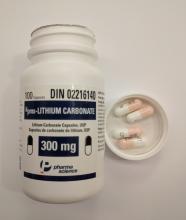
Natural Lithium in Drinking Water Linked to Lower Suicide Rates

By Alex Berezow, PhD — Aug 24, 2020
For every additional microgram per liter of lithium in the water supply, the suicide rate dropped by 0.27 per 100,000 people per year.

For every additional microgram per liter of lithium in the water supply, the suicide rate dropped by 0.27 per 100,000 people per year.

Politics and the FDA

By David Shlaes — Aug 24, 2020
If you're someone who believes that the Food and Drug Administration is purely guided by science and that politics has never influenced its decisions, we likely live on different planets. As for some background, here's some recommended reading to go with our overall perspective on this issue.

If you're someone who believes that the Food and Drug Administration is purely guided by science and that politics has never influenced its decisions, we likely live on different planets. As for some background, here's some recommended reading to go with our overall perspective on this issue.

Remdesivir Disappoints. Again.

By Josh Bloom — Aug 24, 2020
Another clinical trial of remdesivir – this time with hospitalized patients having moderate COVID-19 – yielded disappointing and strange results. The first randomized trial showed a modest benefit in patients with severe COVID, so theoretically the drug should have worked better in patients who weren't as sick. But, it didn't.

Another clinical trial of remdesivir – this time with hospitalized patients having moderate COVID-19 – yielded disappointing and strange results. The first randomized trial showed a modest benefit in patients with severe COVID, so theoretically the drug should have worked better in patients who weren't as sick. But, it didn't.

Does Air Pollution Cause Diabetes?

By Chuck Dinerstein, MD, MBA — Aug 24, 2020
There are any number of papers supporting the idea that higher levels of air pollution are inversely correlated with poorer health outcomes. These studies all suffer from the fellow travelers of air pollution, traffic density, poverty, and lesser education which confound a clear linkage between air pollution and health. A new study offers a possibility.

There are any number of papers supporting the idea that higher levels of air pollution are inversely correlated with poorer health outcomes. These studies all suffer from the fellow travelers of air pollution, traffic density, poverty, and lesser education which confound a clear linkage between air pollution and health. A new study offers a possibility.

Beyond Science and Decisions: Results from the Recent Workshop

By Michael Dourson — Aug 21, 2020
The most recent workshop of the Beyond Science and Decisions series was conducted at the National Institute for Occupational Safety and Health (NIOSH) in Cincinnati, Ohio, in February of this year.

The most recent workshop of the Beyond Science and Decisions series was conducted at the National Institute for Occupational Safety and Health (NIOSH) in Cincinnati, Ohio, in February of this year.

What's Magical About the Surgical Management of Obesity?

By Chuck Dinerstein, MD, MBA — Aug 21, 2020
Obesity remains a significant health problem, especially when it increases one's susceptibility to COVID-19. While better eating habits and exercise have long been the mainstays of weight reduction, in the last 10-to-15 years surgical rearrangements of the gastrointestinal tract have come to the fore. Not only do they reduce weight, but they've improved hypertension and diabetes mellitus. A new study compares surgical and medical management for diabetes.

Obesity remains a significant health problem, especially when it increases one's susceptibility to COVID-19. While better eating habits and exercise have long been the mainstays of weight reduction, in the last 10-to-15 years surgical rearrangements of the gastrointestinal tract have come to the fore. Not only do they reduce weight, but they've improved hypertension and diabetes mellitus. A new study compares surgical and medical management for diabetes.

Will Artificial Intelligence Replace Pathologists, Radiologists, Microbiologists?

By Alex Berezow, PhD — Aug 21, 2020
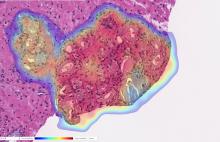
If artificial intelligence can replace some highly specialized medical doctors, is any job safe? It appears the biomedical profession is ripe for an overhaul.

If artificial intelligence can replace some highly specialized medical doctors, is any job safe? It appears the biomedical profession is ripe for an overhaul.