Are Nature's Sounds Calming? Study's Claim Sounds Distorted

By Erik Lief — Apr 04, 2017
Listening to the tranquil sounds of nature makes you feel more relaxed. Most people would believe that statement to be true, since it's both plausible and intuitive. And factually, maybe it is true. But can it be scientifically proven? British researchers tried to, but following their reasoning was analogous to getting lost in the woods.

Listening to the tranquil sounds of nature makes you feel more relaxed. Most people would believe that statement to be true, since it's both plausible and intuitive. And factually, maybe it is true. But can it be scientifically proven? British researchers tried to, but following their reasoning was analogous to getting lost in the woods.

Vitamin Infusions: Shades of Linus Pauling?

By Ruth Kava — Apr 04, 2017
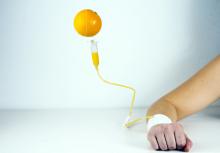
We know you're not going to attach an intravenous line to an orange to get a vitamin-C boost, but this picture is worth a 1,000 words. Hyper-healthnicks are visiting "infusion clinics" for IVs of all sorts of vitamins and minerals. These costly clinics may have a dubious connection to "good" health, but hey – they sue are chic and comfortable.   

We know you're not going to attach an intravenous line to an orange to get a vitamin-C boost, but this picture is worth a 1,000 words. Hyper-healthnicks are visiting "infusion clinics" for IVs of all sorts of vitamins and minerals. These costly clinics may have a dubious connection to "good" health, but hey – they sue are chic and comfortable. 
 

A New View of the Politics of Science

By Chuck Dinerstein, MD, MBA — Apr 04, 2017
Is science political? Around climate change, yes it is. But regarding oxidative phosphorylation, not so much. A new paper uses the market to describe the politics of science.

Is science political? Around climate change, yes it is. But regarding oxidative phosphorylation, not so much. A new paper uses the market to describe the politics of science.

Technophobia: A Key Tenet of the Organic Food Religion

By Alex Berezow, PhD — Apr 03, 2017
From telecommunications and transportation to healthcare and entertainment, cutting-edge technology serves society well. But not when it comes to food. Oh no. We don't want technology anywhere near that. Neanderthal know-how is perfectly fine, thanks. What's behind that bizarre thinking?

From telecommunications and transportation to healthcare and entertainment, cutting-edge technology serves society well. But not when it comes to food. Oh no. We don't want technology anywhere near that. Neanderthal know-how is perfectly fine, thanks. What's behind that bizarre thinking?

Vitamin D, Calcium Supplements Have No Impact on Cancer Rate, New Study Shows

By Jamie Wells, M.D. — Apr 03, 2017
A new study in the Journal of the American Medical Association finds that there was no significant reduction of the incidence of all-type cancer in older women receiving Vitamin D and calcium supplements.

A new study in the Journal of the American Medical Association finds that there was no significant reduction of the incidence of all-type cancer in older women receiving Vitamin D and calcium supplements.

Two Thirds of Mars' Atmosphere is Gone

By Erik Lief — Apr 03, 2017
New data from NASA just revealed that it'll be even harder for humans to ever set up shop on the Red Planet, because it's becoming ever-more dead. Roughly 65 percent of Mars' atmosphere has been eliminated, literally forced out to space by solar wind and radiation.

New data from NASA just revealed that it'll be even harder for humans to ever set up shop on the Red Planet, because it's becoming ever-more dead. Roughly 65 percent of Mars' atmosphere has been eliminated, literally forced out to space by solar wind and radiation.

Roadkill Microbes Could Fight Yeast Infections

By Alex Berezow, PhD — Apr 03, 2017
Most motorists, as they glide their cars carefully around the bloody remains, find highway carcasses repulsive. But a team of microbiologists and chemists from the University of Oklahoma hope that roadkill will prove to be a biomedical gold mine.

Most motorists, as they glide their cars carefully around the bloody remains, find highway carcasses repulsive. But a team of microbiologists and chemists from the University of Oklahoma hope that roadkill will prove to be a biomedical gold mine.

Keys: Now Where Did I Put Them?

By Ruth Kava — Apr 03, 2017
You're ready to go somewhere, but you can't because you've misplaced your keys, or purse, or something else. And this seems to happen more often as we age. So what can we do? According to Scottish researchers studying human searching behavior, one thing to do is to optimize your search strategy.

You're ready to go somewhere, but you can't because you've misplaced your keys, or purse, or something else. And this seems to happen more often as we age. So what can we do? According to Scottish researchers studying human searching behavior, one thing to do is to optimize your search strategy.

Gallium: Melts in Your Mouth, Not Your Hands!

By Josh Bloom — Apr 03, 2017
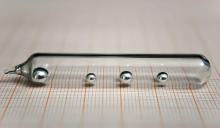
While M&Ms melt in your mouth but not in your hands, the mysterious element, gallium, does both. It has some rather unique and interesting properties. If you find you're playing Final Jeopardy, and the topic is "Stuff About Gallium," this could come in awfully handy. Otherwise, not so much. But it's still cool.

While M&Ms melt in your mouth but not in your hands, the mysterious element, gallium, does both. It has some rather unique and interesting properties. If you find you're playing Final Jeopardy, and the topic is "Stuff About Gallium," this could come in awfully handy. Otherwise, not so much. But it's still cool.

I Read the Paper; Turmeric Still Doesn't Work

By Julianna LeMieux — Apr 03, 2017
A reader sent us scientific literature defending curcumin (the active ingredient in turmeric), and nothing with us has changed. We remain highly critical of naturopaths, as well as other healers who use it. And in the wake of a young woman's recent death, that group includes anyone who defends administering these substances intravenously.

A reader sent us scientific literature defending curcumin (the active ingredient in turmeric), and nothing with us has changed. We remain highly critical of naturopaths, as well as other healers who use it. And in the wake of a young woman's recent death, that group includes anyone who defends administering these substances intravenously.