When submitting a scientific manuscript to a journal for review, it's usually safe to say that the worst possible outcome is that it will be rejected. However, a far worse fate is indeed possible – plagiarism – and it happened to Dr. Michael Dansinger.
Search results
Do you "hold the fries?" You might want to if your pants buttons start blowing off. But don't do so because of a deep-fried, phony chemical scare: acrylamide.
A new study published in JAMA details the U.S. county-level trends in mortality rates for major causes of death. While a bit flawed, it's a step in the right direction as regional health disparity is often way more vital to informing policy than national tendencies.
Jamie Wells
The Food and Drug Administration told Swedish Match that its snus tobacco product will not receive a MRTP designation, as a Modified Risk Tobacco Product. Snus, a small packet of moist tobacco used orally, is popular in Sweden, which has a substantially lower rate of cigarette-related death and disability than other European Union nations.
HankCampbell
By now, anyone even slightly versed in health issues understands that cigarette smoking can irretrievably damage the lungs — whether via lung cancer or other disease processes. Even those who've never smoked may develop these conditions. A recent study indicates that never-smoking women are more likely to develop COPD than never-smoking men.
RuthKava
It is that time of year, and some will talk about fire safety around Christmas trees. But why no mention of the possible dangers in celebrating Chanukah – which begins on Dec. 24 and ends on Jan. 1? Let's fix that.
How about an invention that will benefit everyone?
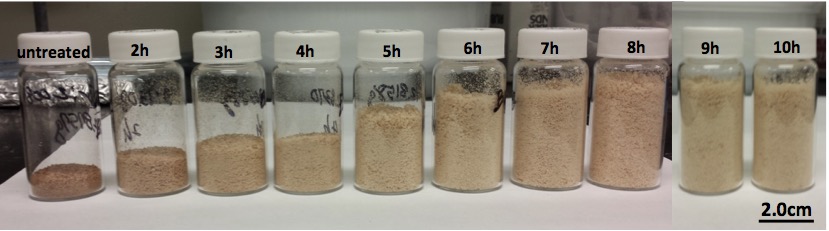
They don't come along very often, but with a little luck Dr. George Bonheyo (1) and his group at the Department of Energy's Pacific Northwest National Laboratory (PNNL) might have something very big on their hands—a novel way to clean up oil spills, with the aid of chemically modified sawdust.
Maternal opioid use is growing nationally. A new study reflects this, its impact on babies and regional disparities. As a result, babies are suffering withdrawal at alarming rates. Our directives must address the symbiotic relationships that perpetuate the current and intergenerational struggles of families.
Jamie Wells
The U.S. Supreme Court decided not to revisit a challenge to the NFL's class-action lawsuit brought by former players. The high court's refusal, which ends a landmark case that began in July 2011, allows for payments approaching $1 billion to start being made this spring to more than 20,000 former players.
SportsNews
To kick off our "12 Days of Christmas" holiday list, highlighting the top stories that we've debunked this year, we start with ... the perennial nuisance, the National Resources Defense Council. Those folks made our 2016 list because they just love scaring people over nothing. Here are a few examples.
Standing on the doorstep of 2017, we can only wonder which anti-science voices will be the loudest next year, as we consider how best to debunk their anti-science messages.
Julianna LeMieux
Chiropractors appear to have a "you have it, we treat it" type of philosophy. That makes us question the validity of their far-out claims and wonder about the evidence that's supposed to support their statements. And we are not alone.
Julianna LeMieux
More vaccinations mean fewer people are getting preventable diseases. But 2016 was a year filled with the fervor of the anti-vaxxer movement. And alarmingly, that dangerous zeal for stopping this effective public health measure, which helps save the lives of children, looks like it is ramping up as we head into 2017.
Julianna LeMieux
In June, we were besieged with headlines stating that hot drinks cause cancer. It was all due to a letter from the International Agency for Research on Cancer, the same letter that overturned its long-standing claim that coffee causes cancer. The bottom line: IARC is confusing. So this holiday season, go ahead and have your coffee -- as hot as you like it.
Julianna LeMieux
On the First Day of Christmas, ACSH gave to me... The End of the NRDC
On the Second Day of Christmas, ACSH gave to me... Two Killer Coffees
On the Third Day of Christmas, ACSH gave to me... Three French Fries
Julianna LeMieux
We tend to associate vaccines with prevention of acute illness — which they're quite good at. But future benefits can also accrue to the vaccinated, such as prevention of shingles in those who have avoided chicken pox, and escaping measles-engendered encephalitis.
RuthKava
Continuing our 12 Days of Christmas series, we dedicate Day 5 to homeopathic products – which can be found in the aisles of almost every pharmacy. However, over the course of this past year, one in particular found itself more and more in the news – and less and less on the shelves.
Julianna LeMieux
OK, America. Time to finally but down that second burger and that extra-large soda. A new CDC report shows that for the first time in 22 years, life expectancy for the average American has dropped. Heart disease, which remains the leading cause of death, is directly linked to nation's ubiquitous overeating epidemic.
SportsNews
With medical fitness to serve being a recurring theme in 2016, Santa Claus requested his doctor release his latest health report. Will he be cleared by Christmas?
Jamie Wells
Ah yes, holiday time is here — so is egg nog, Christmas cookies and Hanukkah latkes — all designed to pack on the pounds. So how to best prevent or treat the resulting overweight or obesity? Science tells us there's no best way. But as we've thought for a while, there are many ways to take the weight off. And if one doesn't work another just might.
RuthKava
Your noggin is not as special as you think. That is, in terms of losing heat in the winter. Here's why you can skip the hat and not be entirely doomed.
Even with the hot-button topic of abortion, there's one thing that nearly everyone can agree upon: having as few abortions as possible. And recent data from the Centers for Disease and Control states that the abortion rate in America has fallen by roughly one fifth from 2004 to 2013.
Alex Berezow
In the mid-1600s, the remains of a small child from a family of nobility, were placed in a crypt in Lithuania. Now we are learning, according to a recent report in the journal Current Biology, that this small body is revealing secrets about the origins and spread of smallpox, one of the deadliest scourges to ever plague mankind.
There's an ever-growing body of evidence that reinforces the health benefits of being with animals. A new study published in BMC Psychiatry explores the role pets had with those suffering from bipolar disorder, schizophrenia and other significant, long-term mental illnesses.
Jamie Wells
It's been nearly one year since the Food and Drug Administration recommended that teens be prevented from using tanning beds, however the agency has yet to make its final ruling. But a new study estimating significant financial and life-saving benefits of such a ban will hopefully prompt the FDA to finally act.
SportsNews
ACSH relies on donors like you. If you enjoy our work, please contribute.
Make your tax-deductible gift today!


Popular articles

ACSH Podcasts