Another View of EPA's Formaldehyde Review

By Michael Dourson — Jun 20, 2022
In several respects, the latest draft of EPA’s formaldehyde IRIS toxicological review is an improvement over an earlier version I reviewed as an EPA advisor in 2017.  Unfortunately, other aspects of EPA’s current draft suffer from a lack of judgment and adherence to EPA’s guidelines and is a missed opportunity to work with outside parties, such as our European colleagues.  The overall impression of EPA’s current draft is that formaldehyde is toxic at levels below what is often found indoors or in outdoor air. 
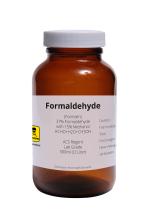
In several respects, the latest draft of EPA’s formaldehyde IRIS toxicological review is an improvement over an earlier version I reviewed as an EPA advisor in 2017.  Unfortunately, other aspects of EPA’s current draft suffer from a lack of judgment and adherence to EPA’s guidelines and is a missed opportunity to work with outside parties, such as our European colleagues.  The overall impression of EPA’s current draft is that formaldehyde is toxic at levels below what is often found indoors or in outdoor air. 

Slow Food's 10 Anti-Pesticide 'Facts' Debunked

By Cameron English — Jun 16, 2022
The activist group Slow Food recently published a listicle warning consumers about the dangers of pesticides. Let's see if their top-10 list stands up to scrutiny.

The activist group Slow Food recently published a listicle warning consumers about the dangers of pesticides. Let's see if their top-10 list stands up to scrutiny.

To Be or Not To Be: Counting Deaths

By Chuck Dinerstein, MD, MBA — Jun 16, 2022
Death seems like it would be a pretty discrete data point with little ambiguity. After all, you either are or are not dead. But as it does so often, the meaning of death in health research is more complex than that simple binary choice. A new study of death and dying in Denmark provides food for thought about how best to use that discrete endpoint to better understand the care we provide.

Death seems like it would be a pretty discrete data point with little ambiguity. After all, you either are or are not dead. But as it does so often, the meaning of death in health research is more complex than that simple binary choice. A new study of death and dying in Denmark provides food for thought about how best to use that discrete endpoint to better understand the care we provide.

What I'm Reading (June 16)

By Chuck Dinerstein, MD, MBA — Jun 16, 2022
What meditation can teach us about listening to others? It is time to BBQ – a chemistry lesson you can eat Does science uncover new “truths” or continue to enslave the “already exploited?” AARP’s conflicted interests

What meditation can teach us about listening to others?
It is time to BBQ – a chemistry lesson you can eat
Does science uncover new “truths” or continue to enslave the “already exploited?”
AARP’s conflicted interests

Is 'Beans to Beef' an Answer to Reducing Global Warming?

By Chuck Dinerstein, MD, MBA — Jun 15, 2022
A new mathematical exercise suggests that if we stop eating beef and simply substitute beans, we can reduce our greenhouse gas (GHG) emissions by 75%. The math is good. But the assumptions? Not so much.

A new mathematical exercise suggests that if we stop eating beef and simply substitute beans, we can reduce our greenhouse gas (GHG) emissions by 75%. The math is good. But the assumptions? Not so much.

COVID-19 Vaccination: To Boost or Not to Boost, is That the Question?

By Fred Lipfert, PhD — Jun 15, 2022
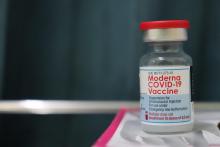
Vaccination protocols have been set by age, but age-specific efficacies are not well established. Age is by far the most important determinant of mortality rate; the probability of death increases exponentially with age for major causes of death, including COVID. Here we examine relationships between mortality rates, age, and vaccination coverage for the original series and booster shots as they changed during the pandemic.[1]

Vaccination protocols have been set by age, but age-specific efficacies are not well established. Age is by far the most important determinant of mortality rate; the probability of death increases exponentially with age for major causes of death, including COVID. Here we examine relationships between mortality rates, age, and vaccination coverage for the original series and booster shots as they changed during the pandemic.[1]

Podcast: Free Medical School Yields Better Health Care? Blueberries Don't Prevent Dementia

By Cameron English — Jun 14, 2022
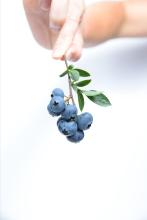
In episode 7 of the Science Dispatch Podcast, we review New York University's experiment to offer students free medical school, the goal being to push doctors into under-served communities and understaffed specialties. We then tackle a popular nutrition myth: the dementia-fighting benefits of blueberries.

In episode 7 of the Science Dispatch Podcast, we review New York University's experiment to offer students free medical school, the goal being to push doctors into under-served communities and understaffed specialties. We then tackle a popular nutrition myth: the dementia-fighting benefits of blueberries.

What is ‘Paxlovid Rebound,’ and Should It Concern Us?

By Josh Bloom — Jun 14, 2022
There's been a lot of news, some of it fear-mongering, about Pfizer's Covid drug Paxlovid. Some people are having their symptoms return after completing the five-day course. Does that mean there is something wrong with the drug, or it's simply a property of the virus? Drs. Henry Miller and Josh Bloom try to provide an answer in Issues & Insights.

There's been a lot of news, some of it fear-mongering, about Pfizer's Covid drug Paxlovid. Some people are having their symptoms return after completing the five-day course. Does that mean there is something wrong with the drug, or it's simply a property of the virus? Drs. Henry Miller and Josh Bloom try to provide an answer in Issues & Insights.

The History and Mystery of Organic Foods

By Jane Caldwell, Ph.D. — Jun 14, 2022
The U.S. National Organic Program (NOP) was established in 1990 as part of the United States Department of Agriculture’s (USDA) Agricultural Marketing Service (AMS). The mission of AMS is to administer programs that “create domestic and international marketing opportunities for U.S. producers of food, fiber, and ‘specialty crops.’” Organic is one such specialty crop. Many U.S. consumers swear by organic foods but are unaware of the history, principles, and regulations behind the NOP.  Read on if you dare to know more.

The U.S. National Organic Program (NOP) was established in 1990 as part of the United States Department of Agriculture’s (USDA) Agricultural Marketing Service (AMS). The mission of AMS is to administer programs that “create domestic and international marketing opportunities for U.S. producers of food, fiber, and ‘specialty crops.’” Organic is one such specialty crop. Many U.S. consumers swear by organic foods but are unaware of the history, principles, and regulations behind the NOP.  Read on if you dare to know more.

Every Picture Tells a Story: Food – How the World Really Works.

By Chuck Dinerstein, MD, MBA — Jun 14, 2022
“Modern food production, be it field cultivations of crops or the capture of wild marine species, is a peculiar hybrid dependent on two different kinds of energy. The first and most obvious is the Sun. But we also need the now indispensable input of fossil fuels and the electricity produced and generated by humans.”

“Modern food production, be it field cultivations of crops or the capture of wild marine species, is a peculiar hybrid dependent on two different kinds of energy. The first and most obvious is the Sun. But we also need the now indispensable input of fossil fuels and the electricity produced and generated by humans.”