Health Risks Of Vaping: Let's Stick To The Science And Speculate Less

By Cameron English — May 25, 2021
Despite increasing evidence that vaping is safer than smoking, uncertainty surrounds the long-term effects of electronic cigarette use. Many in the tobacco control field have used the lack of data to speculate about these unknown risks. Here's a better way to deal with the uncertainty.

Despite increasing evidence that vaping is safer than smoking, uncertainty surrounds the long-term effects of electronic cigarette use. Many in the tobacco control field have used the lack of data to speculate about these unknown risks. Here's a better way to deal with the uncertainty.

The Fate of Irreproducible Research

By Chuck Dinerstein, MD, MBA — May 25, 2021
There seems to be a reproducibility “crisis” in the sciences, where the results obtained by one group of researchers cannot be reproduced by another, putting the validity of the original work in doubt. What is the fate of those papers? Do they languish in some academic backwater hell lining birdcages?

There seems to be a reproducibility “crisis” in the sciences, where the results obtained by one group of researchers cannot be reproduced by another, putting the validity of the original work in doubt. What is the fate of those papers? Do they languish in some academic backwater hell lining birdcages?

'Genelection': Should We Select Children Based on Their Genetic Scores?

Advances in genetics have been revolutionized in the last few years. First came CRISPR, which can edit single genes, possibly preventing diseases with a single genetic determinant – raising the possibility of gene editing of children. CRISPR is too immature to be commercialized for this purpose, and this debate is speculative for now. But genome-wide association studies (GWAS) - which assesses the entire genome and can identify multiple genetic markers predictive of disease -- have made landfall and are being commercialized for that purpose.

Advances in genetics have been revolutionized in the last few years. First came CRISPR, which can edit single genes, possibly preventing diseases with a single genetic determinant – raising the possibility of gene editing of children. CRISPR is too immature to be commercialized for this purpose, and this debate is speculative for now. But genome-wide association studies (GWAS) - which assesses the entire genome and can identify multiple genetic markers predictive of disease -- have made landfall and are being commercialized for that purpose.

Pro-Vaccine Americans Ruin COVID Disaster Narrative

By Cameron English — May 24, 2021
As COVID-19 cases drop and immunization rates rise, Americans are proving the media's glass-half-empty predictions about vaccine hesitancy mostly false. It turns out that people don't like getting sick, and they'll take steps to protect themselves when given the tools to do so.

As COVID-19 cases drop and immunization rates rise, Americans are proving the media's glass-half-empty predictions about vaccine hesitancy mostly false. It turns out that people don't like getting sick, and they'll take steps to protect themselves when given the tools to do so.

Comments to the FDA: Opioid Dosing Based on Milligram Morphine Equivalents Is Unscientific

By Josh Bloom — May 24, 2021
The FDA is conducting a workshop to discuss the science (lack thereof, really) of Morphine Milligram Equivalents as it applies to the atrocious CDC 2016 Opioid Prescribing Guidelines. Public comments have been solicited. Here are mine.

The FDA is conducting a workshop to discuss the science (lack thereof, really) of Morphine Milligram Equivalents as it applies to the atrocious CDC 2016 Opioid Prescribing Guidelines. Public comments have been solicited. Here are mine.

An Environmental View of Nuclear Energy

By Andrew Karam, Ph.D., CHP — May 24, 2021
Some of my best memories are of the times I spent hiking and camping with my family as a child, Boy Scout, and on leave from the Navy.  I have great memories of swimming in rivers, lakes, and ponds; running for the park rangers when bears invaded our campsite, of watching the sunset over the ocean (or rise over the rim of a canyon).    What bothers me is that today, so many of these things can no longer be enjoyed.

Some of my best memories are of the times I spent hiking and camping with my family as a child, Boy Scout, and on leave from the Navy.  I have great memories of swimming in rivers, lakes, and ponds; running for the park rangers when bears invaded our campsite, of watching the sunset over the ocean (or rise over the rim of a canyon). 
 
What bothers me is that today, so many of these things can no longer be enjoyed.

Video: Ginko Biloba Trees and Extracts

By Joe Schwarcz — May 23, 2021
Extracts from the Ginko Biloba tree have long been used as naturopathic remedies for issues like memory loss and cognitive impairment. But is there any scientific evidence to support their use?

Extracts from the Ginko Biloba tree have long been used as naturopathic remedies for issues like memory loss and cognitive impairment. But is there any scientific evidence to support their use?

Environmental Injustice: Are We Stewing in Our Own Juices?

By Fred Lipfert, PhD — May 21, 2021
The New York Times recently featured a new study by Christopher Tessum and colleagues on disproportionate exposures to people of color from fine particle (PM2.5) emissions, raising questions about environmental injustice.

The New York Times recently featured a new study by Christopher Tessum and colleagues on disproportionate exposures to people of color from fine particle (PM2.5) emissions, raising questions about environmental injustice.

In The Heat of the Moment: Healthcare Guidelines During the Pandemic

By Chuck Dinerstein, MD, MBA — May 21, 2021
According to at least one source [1], it takes an average of 17 years for a proven intervention to be fully implemented. By that metric, we would have no treatments for COVID-19 besides those identified anecdotally. How did the boots on the ground of our healthcare systems actually respond?

According to at least one source [1], it takes an average of 17 years for a proven intervention to be fully implemented. By that metric, we would have no treatments for COVID-19 besides those identified anecdotally. How did the boots on the ground of our healthcare systems actually respond?

Are GMOs Making You Sick? 26 Years Later, The Answer Is Still 'No'

By Cameron English — May 20, 2021
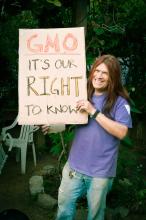
The anti-biotech movement continues to warn that consuming GE crops makes people sick. A recent email blast from The Institute for Responsible Technology typifies the latest arguments coming from activist groups. How well do these stand up to the facts?

The anti-biotech movement continues to warn that consuming GE crops makes people sick. A recent email blast from The Institute for Responsible Technology typifies the latest arguments coming from activist groups. How well do these stand up to the facts?