Don't Abolish Billionaires. The World Is a Better Place Because of Them

By Alex Berezow, PhD — Dec 16, 2019
Yes, life is unfair, and that partially explains why billionaires exist. But many billionaires have used their tremendous wealth to help the poor and boost public health. For these reasons, we should not be scornful, but grateful.

Yes, life is unfair, and that partially explains why billionaires exist. But many billionaires have used their tremendous wealth to help the poor and boost public health. For these reasons, we should not be scornful, but grateful.

Debunking the Myth of Who Funds Biomedical Innovation

By Robert Popovian — Dec 16, 2019
Who funds this research? Most would say it's government, but they'd be wrong. ACSH friend Dr. Robert Popovian, vice president of Pfizer's U.S. Government Relations, discusses this perennially controversial topic.

Who funds this research? Most would say it's government, but they'd be wrong. ACSH friend Dr. Robert Popovian, vice president of Pfizer's U.S. Government Relations, discusses this perennially controversial topic.

Social Media Exposed!

By Chuck Dinerstein, MD, MBA — Dec 16, 2019
The ubiquitous online portals are always in the news. A new study looks at how we use – and are used by – these virtual conversations that first started taking place around the campfire before moving to the water cooler.

The ubiquitous online portals are always in the news. A new study looks at how we use – and are used by – these virtual conversations that first started taking place around the campfire before moving to the water cooler.

Scientific Studies as 'Click Bait?'

By Jeffrey Singer — Dec 16, 2019
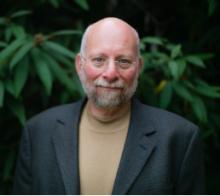
Clickbait – provocative and intentionally misleading headlines online, designed to draw in newspaper or magazine readers – are nothing new to ACSH, or one of our trusted advisors. Have things gotten worse? That advisor, Dr. Jeffrey Singer (pictured), wonders whether scientific studies have stooped to an extremely low level.

Clickbait – provocative and intentionally misleading headlines online, designed to draw in newspaper or magazine readers – are nothing new to ACSH, or one of our trusted advisors. Have things gotten worse? That advisor, Dr. Jeffrey Singer (pictured), wonders whether scientific studies have stooped to an extremely low level.

Will 'The Game Changers’ Change Your Game?

By Joe Schwarcz — Dec 14, 2019
The feats of the athletes in a Netflix documentary cannot be considered to be proof of the benefits of a vegan diet for athletic performance. For every vegan “star,” one can find numerous top-level athletes who gorge on meat.

The feats of the athletes in a Netflix documentary cannot be considered to be proof of the benefits of a vegan diet for athletic performance. For every vegan “star,” one can find numerous top-level athletes who gorge on meat.

Election Polls Should Report Confidence Intervals, Not Just Margins of Error

By Alex Berezow, PhD — Dec 14, 2019
Understanding the confidence interval will help you grasp what an election poll is -- or is not -- saying. As you might have guessed, the media consistently gets it wrong.

Understanding the confidence interval will help you grasp what an election poll is -- or is not -- saying. As you might have guessed, the media consistently gets it wrong.

Gold: Nobility, Lousy Drugs and a $666 Douche Burger. Another Chemistry Lesson From Hell.

By Josh Bloom — Dec 13, 2019
Gold is known as a noble metal because of its lack of chemical reactivity. But if you treat it right, you can get it to do some cool things. You can chew on it, make some lousy drugs, screw up the environment mining it, and (maybe) even make a super-pricey burger. Really.

Gold is known as a noble metal because of its lack of chemical reactivity. But if you treat it right, you can get it to do some cool things. You can chew on it, make some lousy drugs, screw up the environment mining it, and (maybe) even make a super-pricey burger. Really.

What I'm Reading (Dec. 13)

By Chuck Dinerstein, MD, MBA — Dec 13, 2019
Here's today's lineup: Why are there smell receptors in the kidney? ... Men and women see the world differently ... Spotify shows us how big data can inform and delight us ... and robots come for the village blacksmith.

Here's today's lineup: Why are there smell receptors in the kidney? ... Men and women see the world differently ... Spotify shows us how big data can inform and delight us ... and robots come for the village blacksmith.

Meaningful Use of Health Information Is Meaningless For Patients

By Chuck Dinerstein, MD, MBA — Dec 11, 2019
A new paper in the periodical Health Affairs demonstrates the separate universes of patients and information technology policymakers. Before you decide that this doesn't affect you, consider that these "meaningful use" programs have already cost the taxpayer $38 billion.

A new paper in the periodical Health Affairs demonstrates the separate universes of patients and information technology policymakers. Before you decide that this doesn't affect you, consider that these "meaningful use" programs have already cost the taxpayer $38 billion.

Welcome to the Proteome: A New Way to Look at Aging

By Chuck Dinerstein, MD, MBA — Dec 10, 2019
Aging, whether you consider it a “natural” biologic process or a disease, is increasingly the subject of scientific investigation that goes beyond epidemiologic studies. Or how diseases impact longevity. Some of the most exciting work comes from studying our metabolism and mapping those changes to specific diseases.

Aging, whether you consider it a “natural” biologic process or a disease, is increasingly the subject of scientific investigation that goes beyond epidemiologic studies. Or how diseases impact longevity. Some of the most exciting work comes from studying our metabolism and mapping those changes to specific diseases.